
Geometry & Number
Everything
starts with
a circle.
Before I touch the wood, I draw every piece with a compass. This page will tell you why.
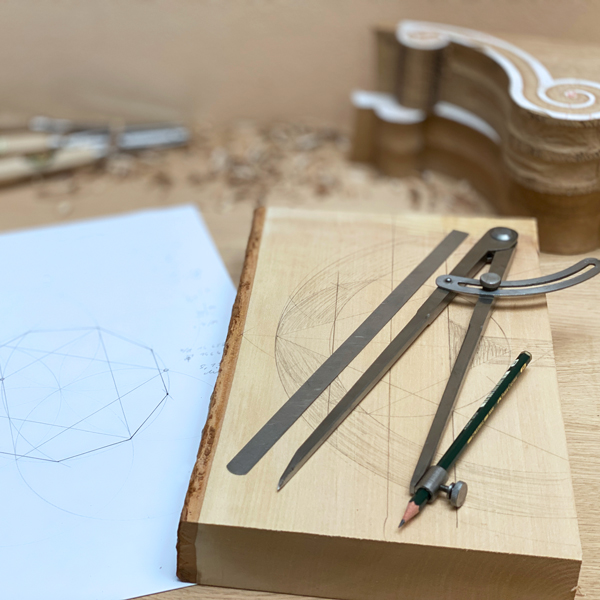 film loop to come
The first move
Put the point down. Turn.
Most people meet geometry at school and leave it there, with a headache and a grudge. That's a pity, because the geometry I use starts with something anyone can do. Put the point of the compass down, keep the distance, turn. That's a circle.
The circle is the mother of all shapes. It has a centre and a circumference, and every other figure is hiding inside it. A square, a hexagon, a pentagon, the most intricate star pattern: I get all of them by dividing a circle. No tape measure, no calculator. Just a compass and a straight edge.
Old traditions saw the circle as the image of perfection, with no beginning and no end. I understand why. Every piece I make starts here.
Put the point down.
How it clicked
A church floor in Rome.
In 2010 I spent a few months in Rome learning Italian. Mornings were for grammar. Afternoons were mine, and I spent them doing what I loved most: walking from church to church, looking at buildings.
Roman churches have wonderful marble floors, inlaid with patterns so intricate you'd think only a genius could design them. One afternoon I had nowhere to be, so I stood and looked at one small detail for a long time, a flower set into the marble. Suddenly I saw how it was made: one circle, and the same radius stepped around it six times. Nothing more.
I could draw that. With the very compass I had used at school for trigonometry homework. Nobody had ever told me that this tool could make something beautiful. It felt like being handed a key.
Back home I built a small timbered house and designed its ornament with compass and ruler, just to find out whether I could. I could.
 Rome
 The ornament, drawn with compass and ruler
 And on the door
The old masters
This is simply how things were made.
For most of history, this was the standard method. The builders of temples and cathedrals, master masons, shipwrights, inlayers and carpenters all designed with a compass, a straightedge and a few proportions. There was nothing secret or esoteric about it. It was their everyday toolkit, the way a laptop is ours. A mason could set out a whole facade with a rope and a few stakes, and anyone on site could check the work.
That's the company I like to keep. Picking up the compass puts me at the end of a very long line, and that's a good place to stand.
I teach these constructions too. In my workshops, teams pick up the compass themselves and find out how much it can do.
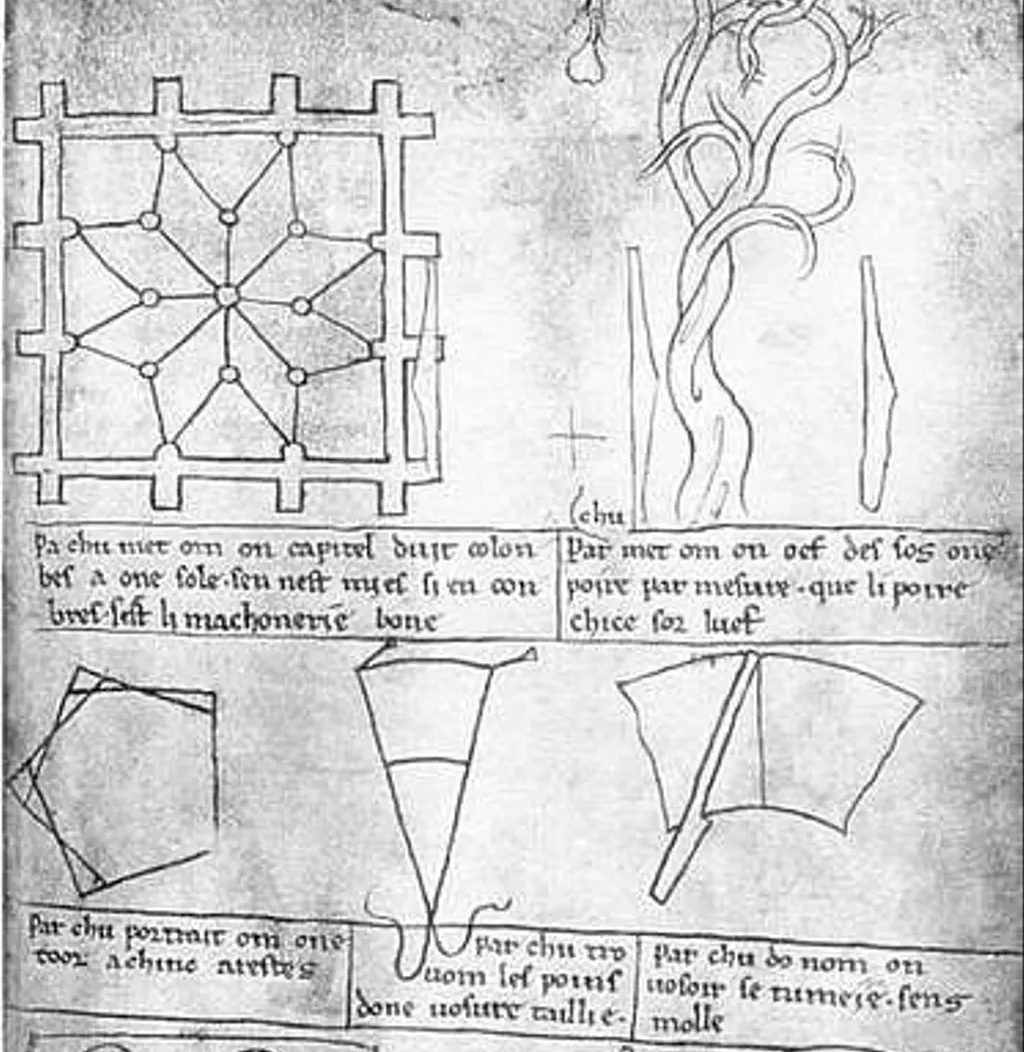 Villard de Honnecourt, sketchbook, around 1230
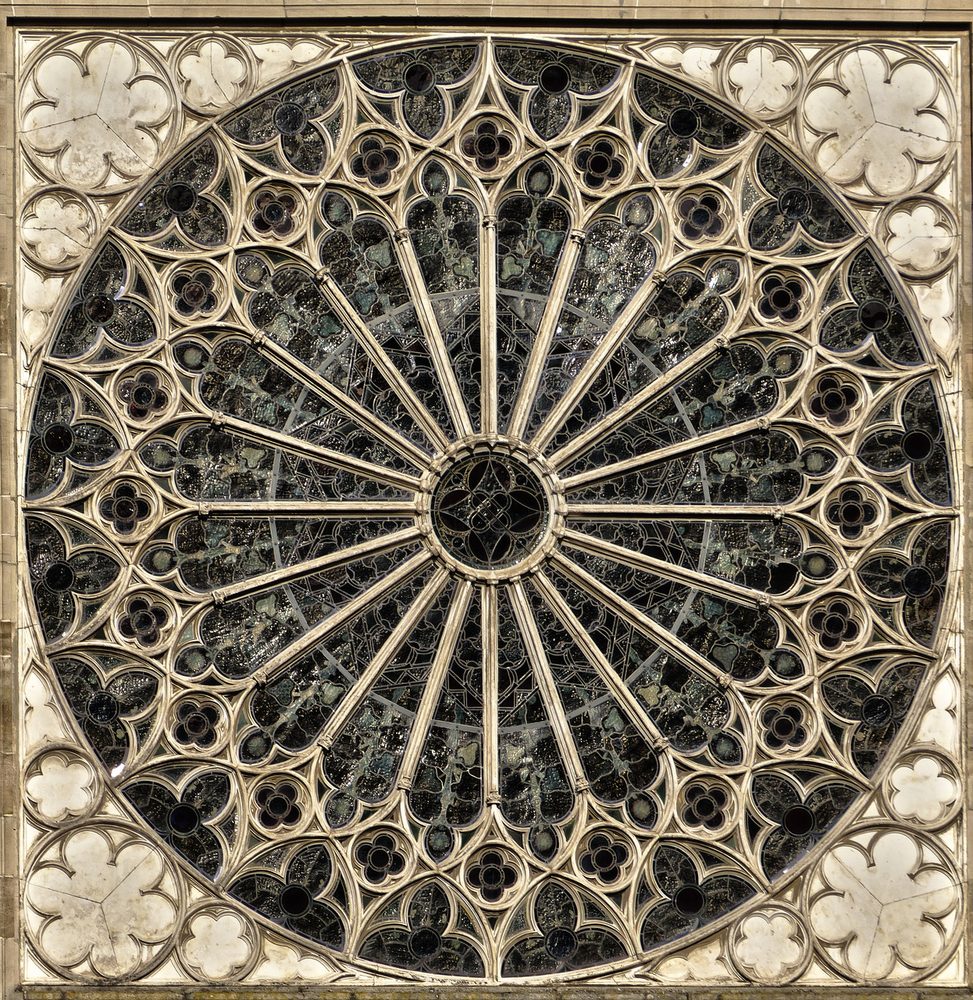 Gothic tracery, set out with the compass
Nature counts too
Nature uses the same numbers I do.
At every scale, nature keeps coming back to the same few numbers. A bee builds its cells with six sides. Lots of flowers open with five petals. And at the north pole of Saturn, a storm more than twice as wide as the Earth has shaped itself into an almost perfect hexagon.
Nature is already perfect, and I see little point in imitating it. What fascinates me is what sits behind that perfection. Why does a flower look so right? Because its parts follow a few simple rules of number and proportion. Those rules are what I borrow, and what I try to make visible in my work.
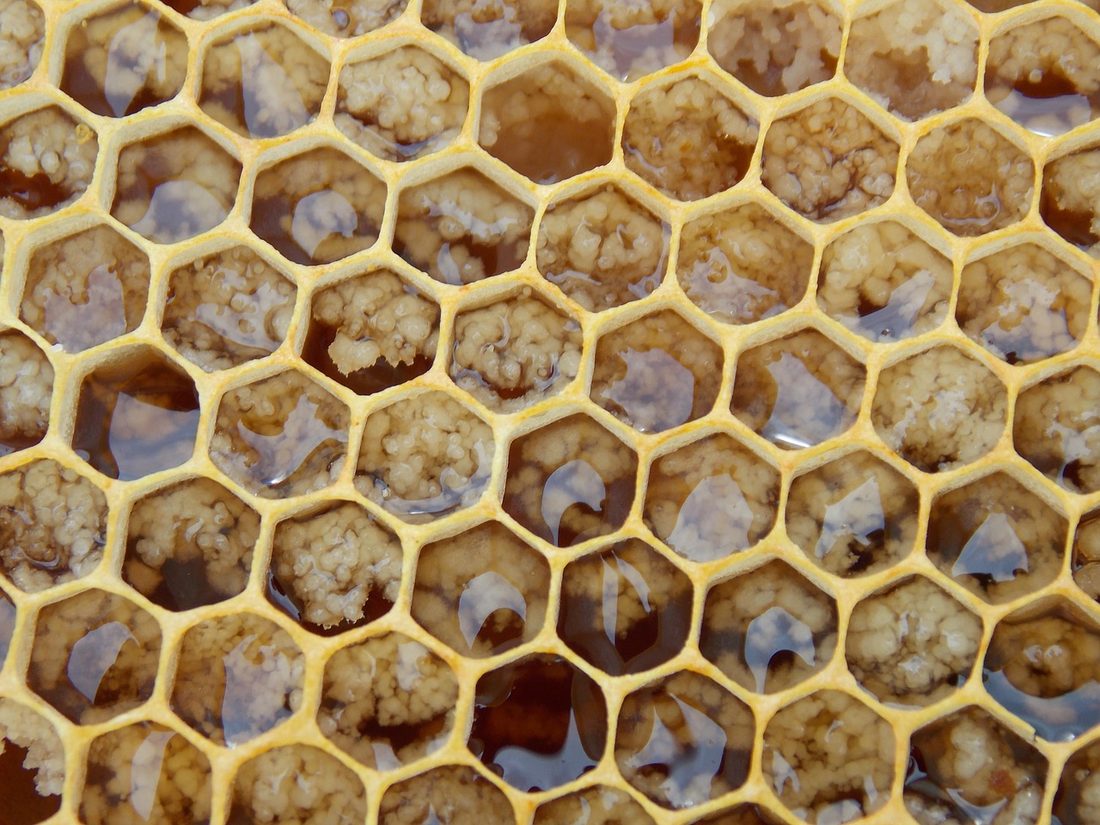 Six: the honeycomb
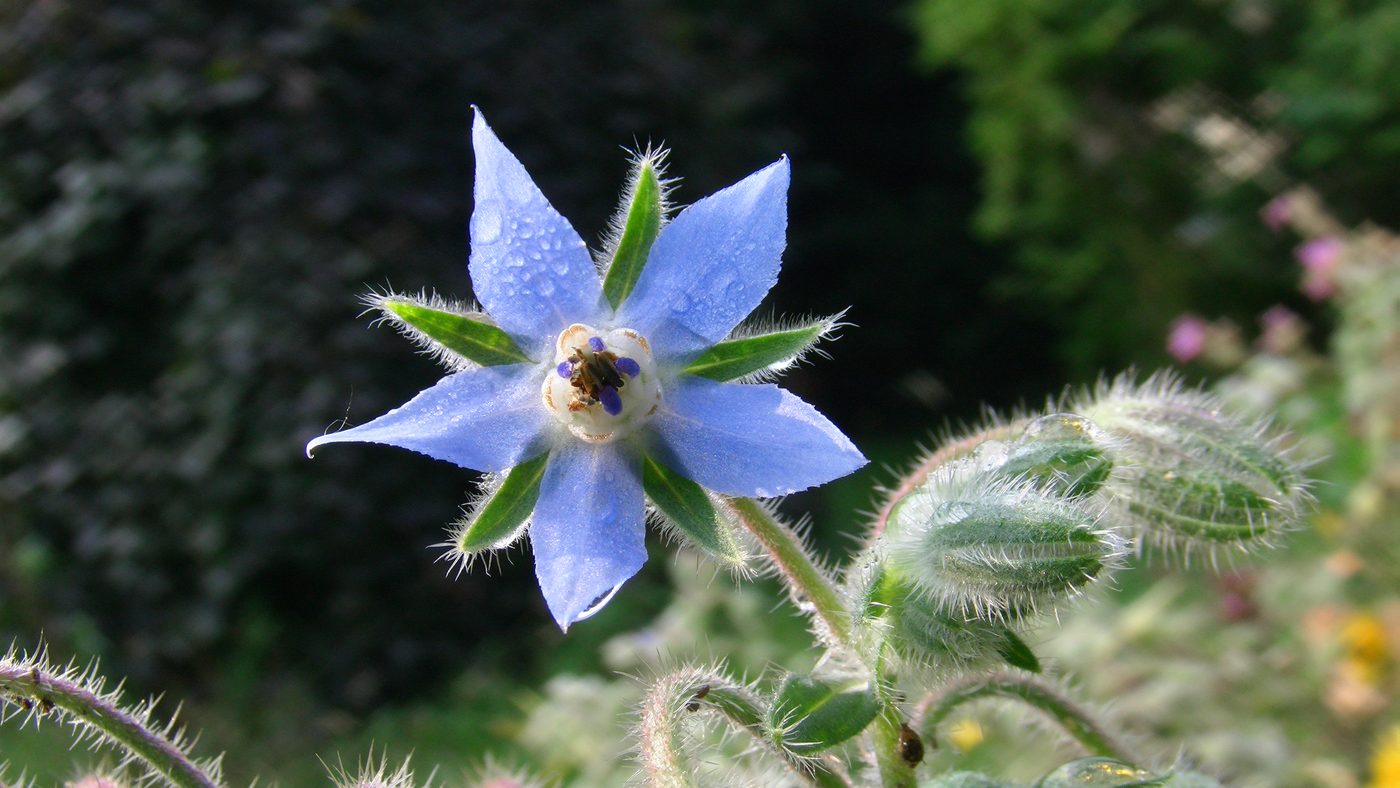 Five: a borage flower
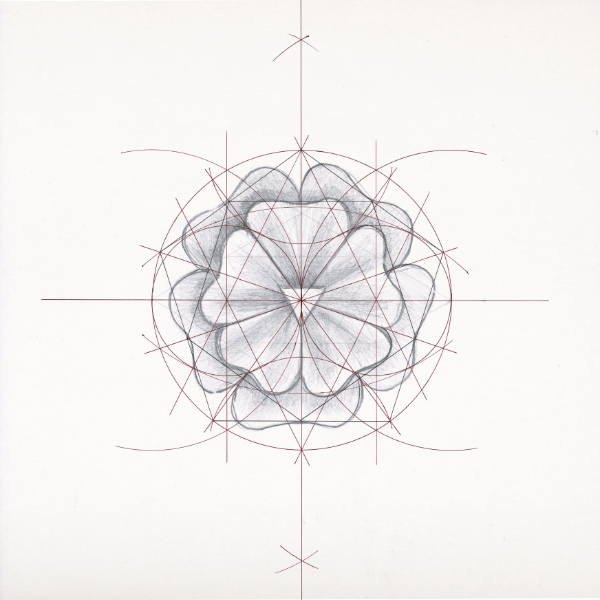 The rule behind it, drawn
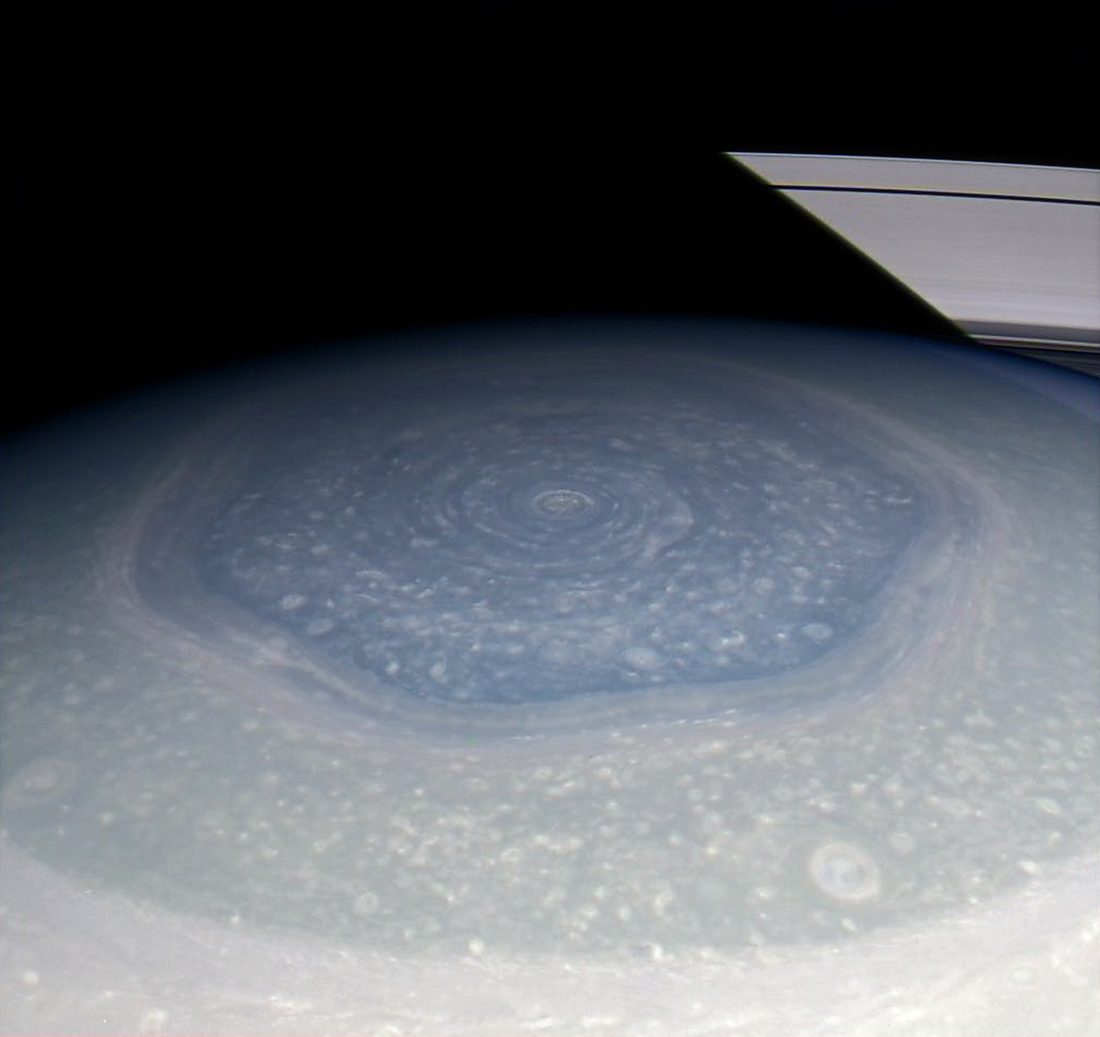 Six again, on Saturn. NASA/JPL-Caltech/SSI, processed by Jason Major
Number
Every number has a character.
For me, number sits underneath everything. Geometry is number you can see. And once you start drawing, you notice that each number behaves differently.
Four, five and six are where it starts. Behind them sit ratios, roots and whole number systems that the old builders handed down, and I've spent years learning to read them. I'll spare you the maths here. You'll see it at work further down.
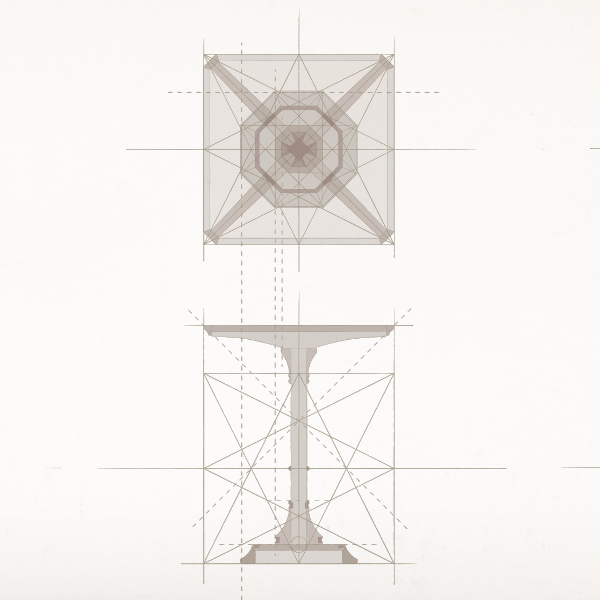
Four
Four is calm and dependable. Squares, right angles, things that stand firmly on the floor. Most furniture is secretly four-fold, for good reason.
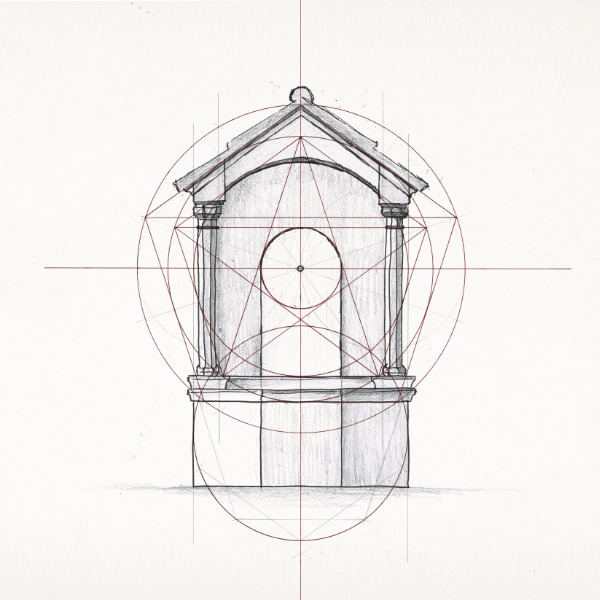
Five
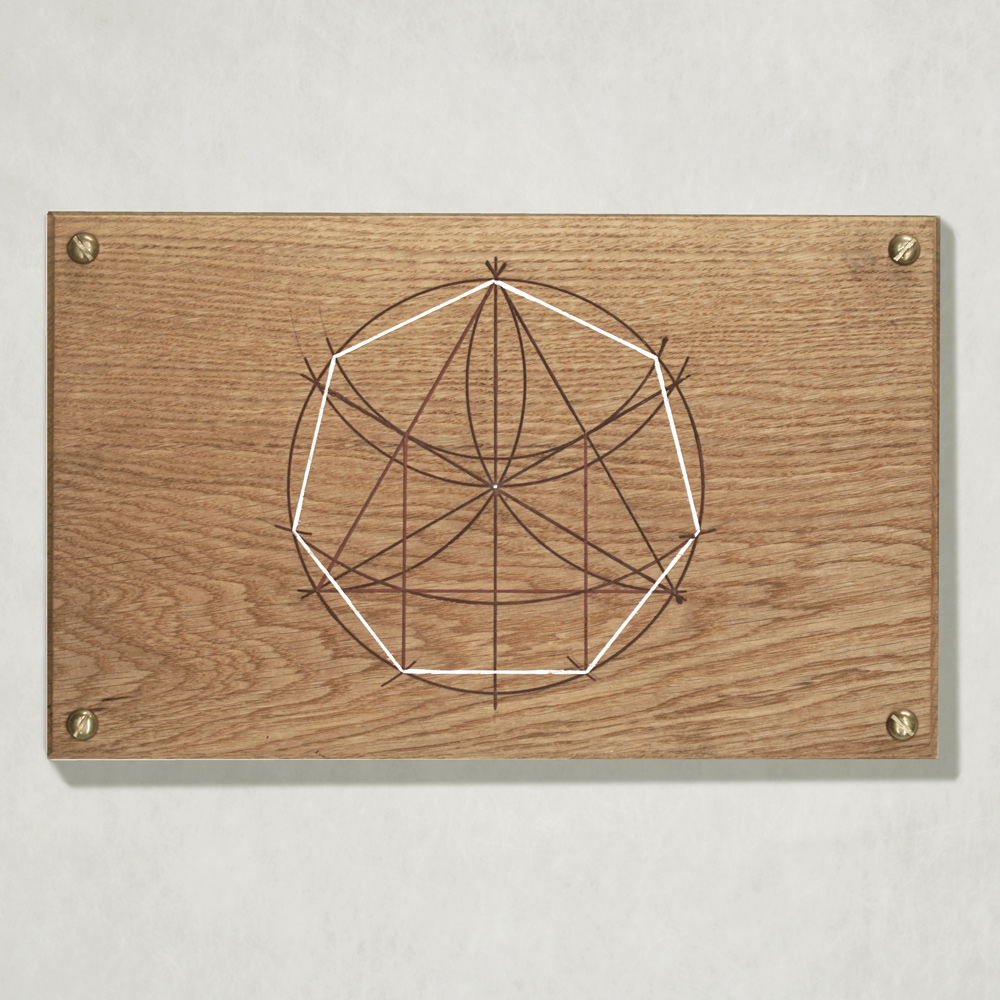
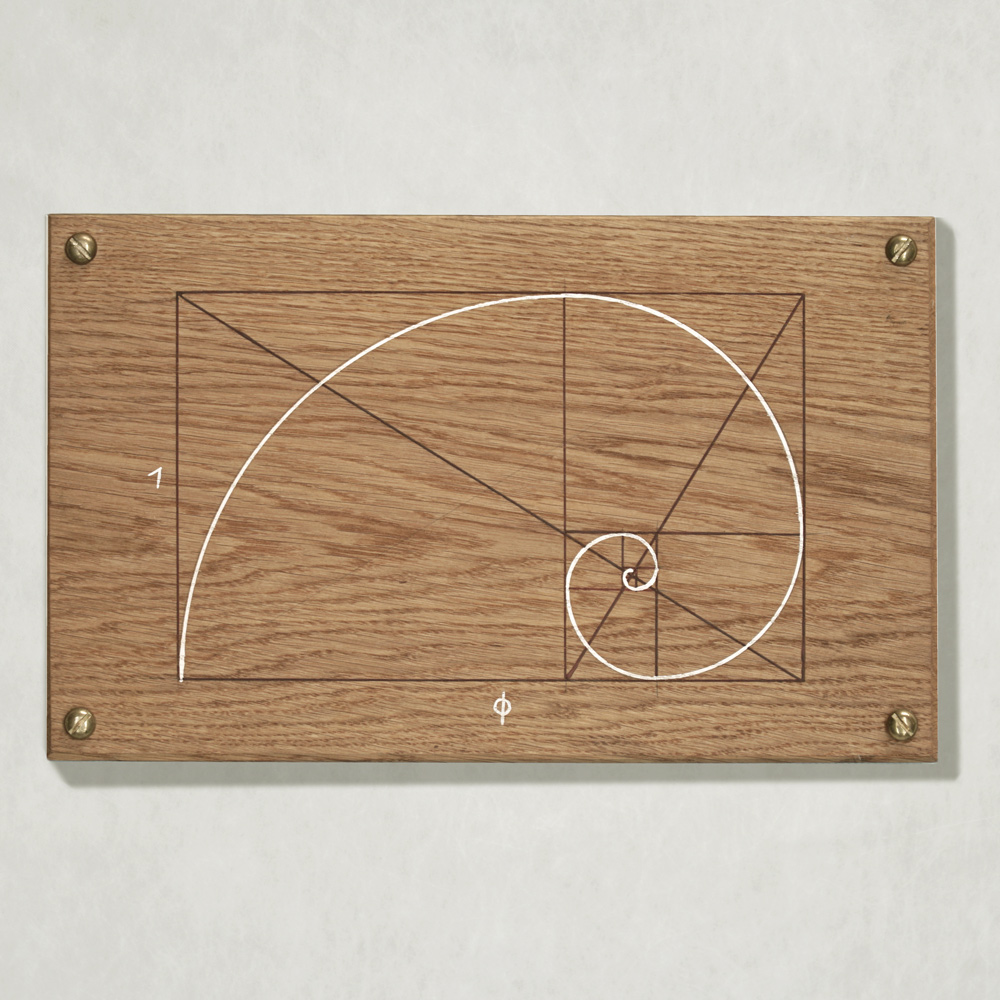
Five is alive. It brings the golden ratio along and never quite sits still. It's harder to draw and harder to build, which is probably why it's my favourite.
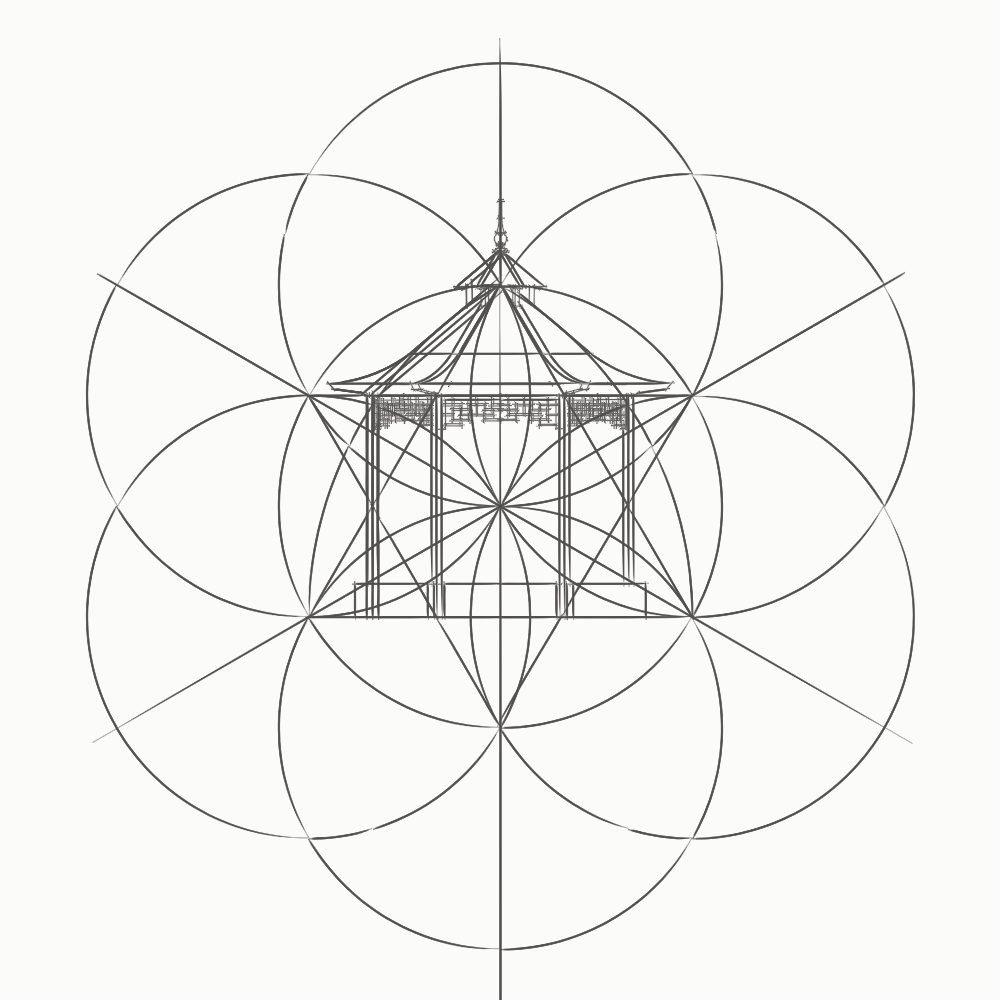
Six
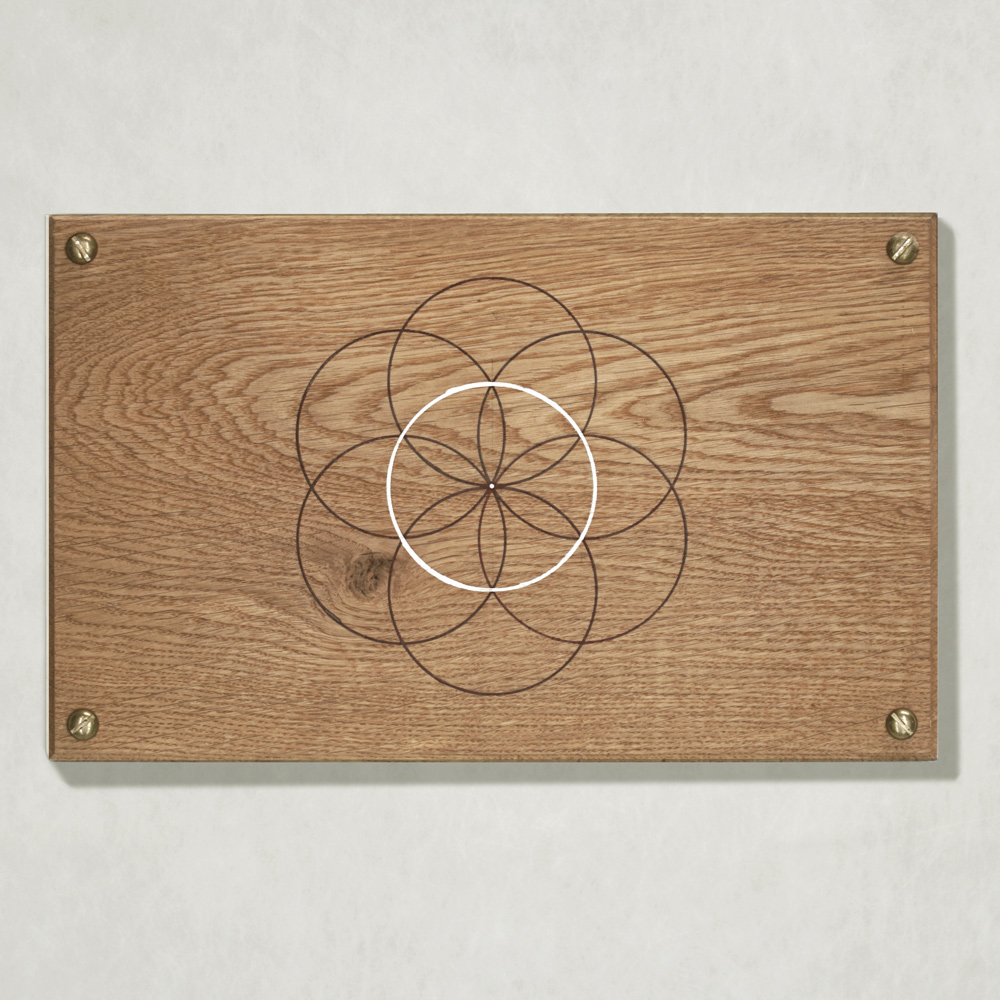
Six is the easy one. It falls out of the compass almost by itself, as I found out in Rome. It repeats and tiles a surface without a gap.
Why
Why do I still draw like it's the Middle Ages?
I could design on a screen. I could draw any shape I like, with no rules at all. So why tie my own hands with circles, lines and proportions?
First, because it works. And here is what I mean by that. When everything is possible, nothing feels inevitable. So much of what gets designed today could just as well be a little wider, a little taller, a little different, and you sense it, even if you can't say why. A piece drawn from geometry has no arbitrary measure in it. Every line answers to the one before it, all the way back to the first circle. Move one thing and the whole piece falls out of tune. You feel that before you understand it, the same way you hear a wrong note without knowing any music theory. The best art has that inevitability, however it gets there. Geometry is how I get there.
Second, because I believe it. Geometry is the building block of our world. Shells, flowers, crystals and planets all grow from the same few proportions, so why would I invent my own? That is my deepest conviction, and I'm in good company: the Pythagoreans, the cathedral builders and the astronomers who heard music in the orbits of the planets thought the same. When I draw with a compass, I use the same order that shapes a flower or a storm on Saturn, and each piece becomes a small, visible part of it.
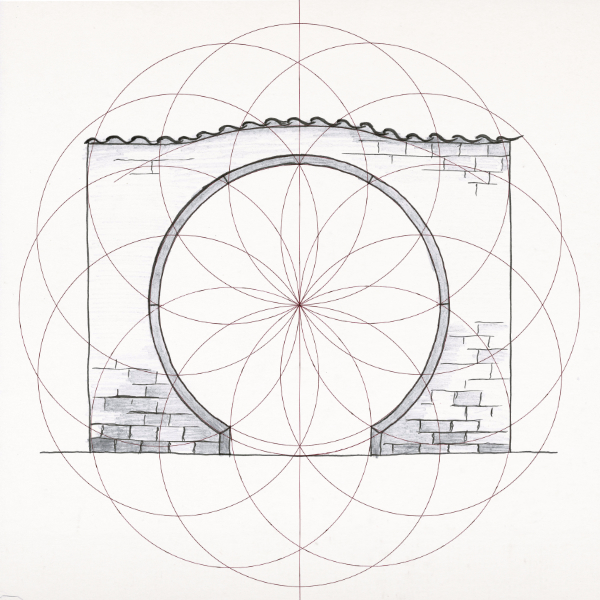 A moon gate, drawn on twelve circles
In the workshop
An afternoon at the bench.
Black and white, three to six minutes, hands and tools only.
From drawing to piece
How a circle became Meridian.
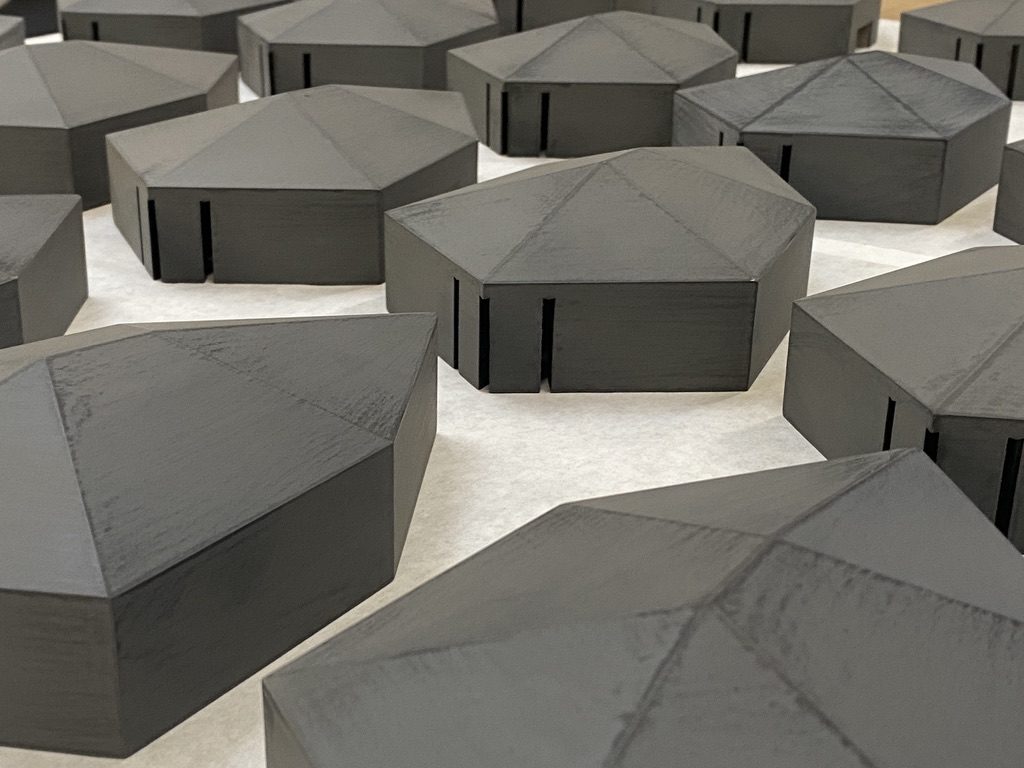
Meridian is a light sculpture that turns the global markets into light, and its geometry is as simple as it gets: one circle, divided into twenty-four. Here is how it got from the drawing board to the wall.
- The circle, 92 cm across.
- Twenty-four divisions: six, then twelve, then twenty-four, each found with the compass.
- One segment drawn at full size, its depth and angles taken from the same construction.
- Templates, cutting, assembly.
- Light.
A blank sheet and a compass.
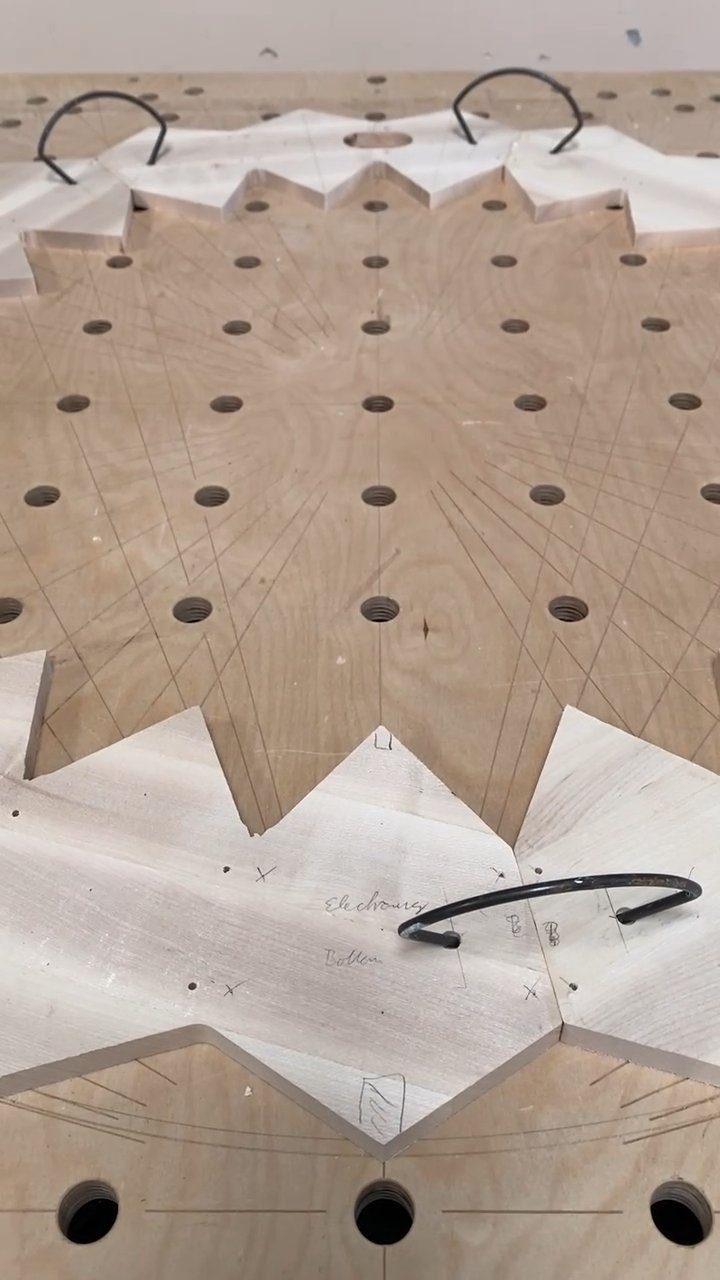 The template, on the drawing
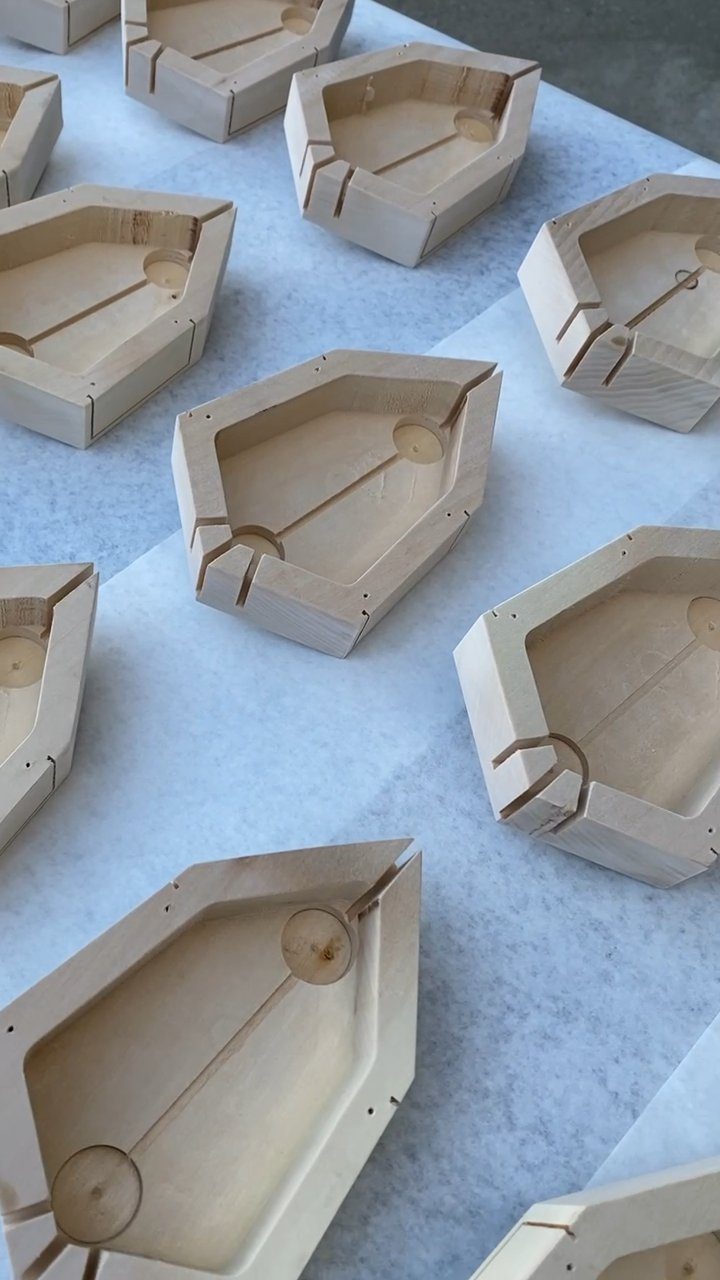 The wooden segments
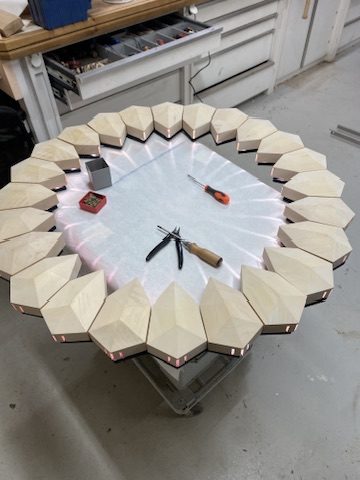 The ring, dry-fitted
 Finished segments
Everything at once
Origin: everything I know, in one piece.
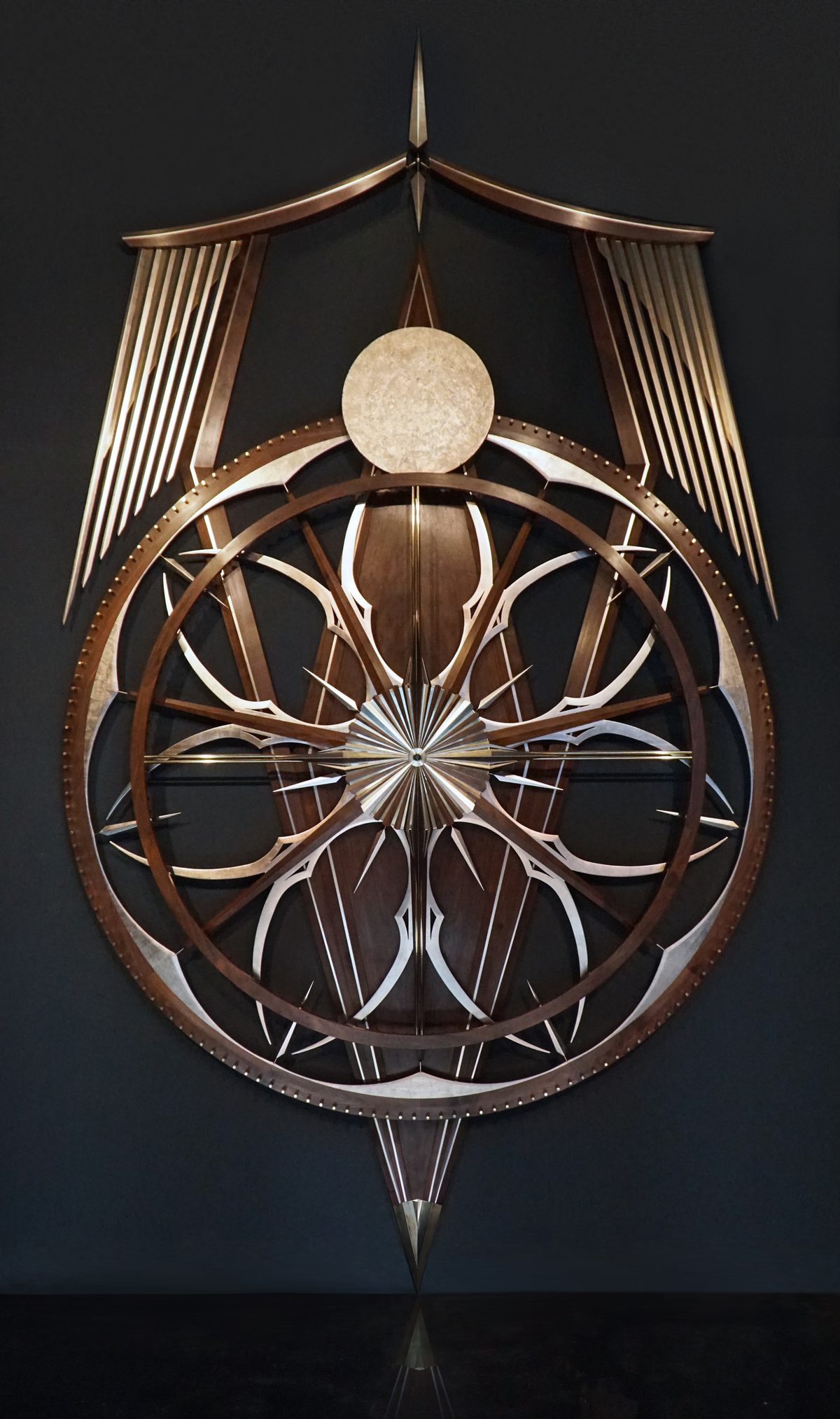
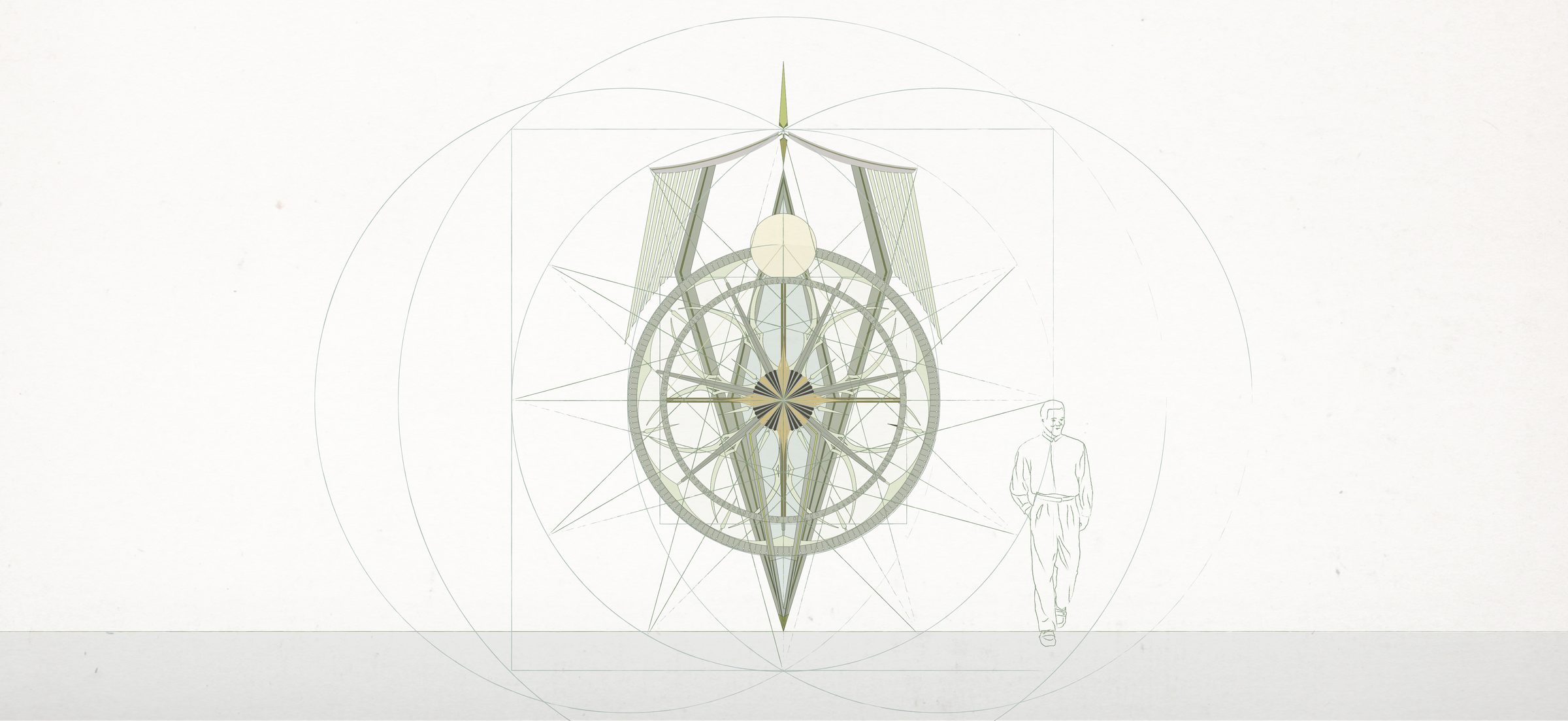
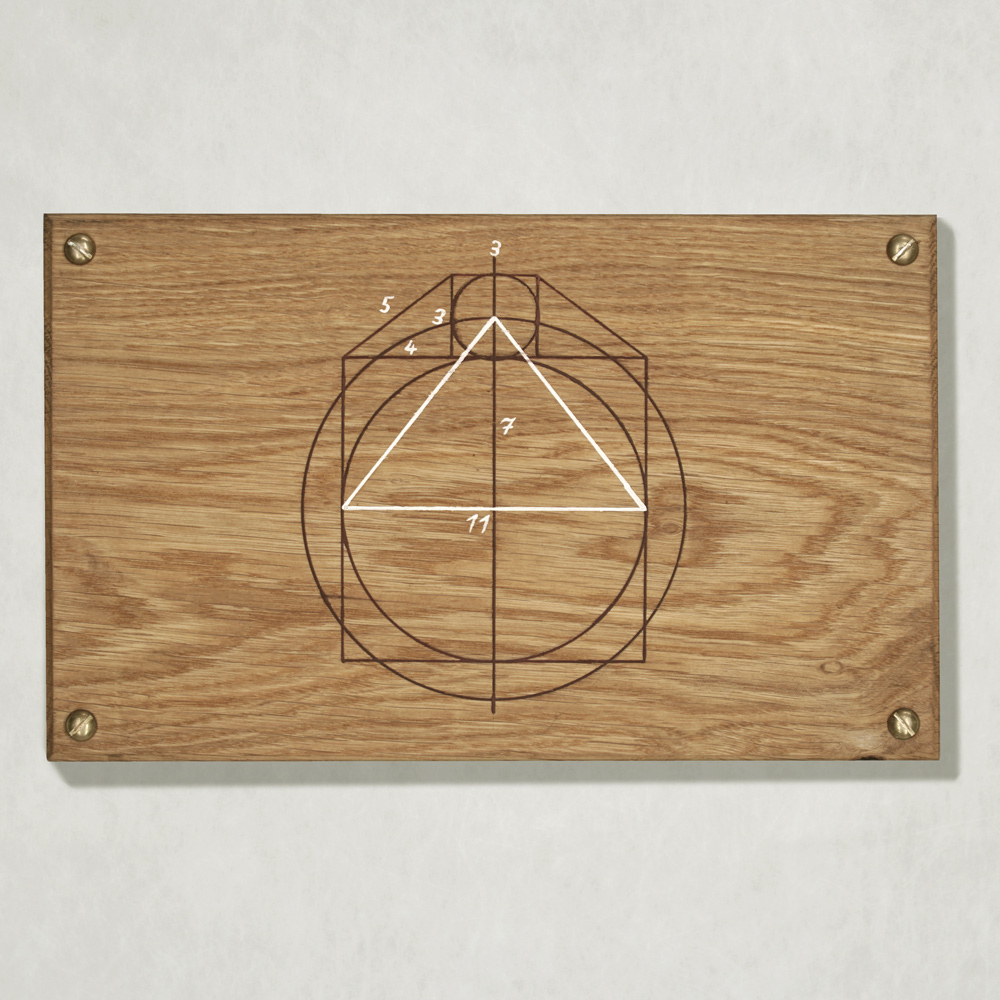
For two thousand years, geometers chased one puzzle: draw a square and a circle with exactly the same perimeter. It's called squaring the circle, and it can never be done perfectly, because π never ends. It became one of the great enigmas in the history of number. The old builders found a figure that comes so close the difference no longer matters, and Origin is built on it. It is made of three circles: a great outer one, an inner one, and a small one that sits in the gap between them. The square around the inner circle has the same perimeter as the great outer circle. And yes, you guessed it: the whole figure can be drawn with a compass and a ruler.
And here it gets strange. The small circle and the inner circle relate as 3 to 11, and so do the Moon and the Earth, accurate to a fraction of a percent. That simple. People have found the same figure in the Great Pyramid and in the stones of Stonehenge. Coincidence? I'll let you decide. I only know I can't look at the sky in quite the same way since.
So I took the figure at its word. Origin follows the Earth and Moon in proportion and in actual size as well, at one inch to a hundred miles. The Moon wheel is 21.6 inches across, and the Moon is 2,160 miles. The Earth circle is 79.2 inches, and the Earth is 7,920 miles. I spent two years making it, in walnut, gold leaf and brass. It is almost five metres tall, and three wheels turn inside it, slowly and silently, so the numbers are always in motion.
Working with me
Not many people still work this way.
There are still stonemasons restoring cathedrals who know how to hold a compass, and a few teachers who pass the old constructions on. But very few people today draw a piece this way and then build it themselves, from the first circle to the last joint. That's what I do, and here is what it gives you.
It looks resolved. Every measure comes from the same drawing, so the parts rhyme with the whole. The piece looks right from every side and holds its place in a room without having to shout.
Every decision has a reason. Why is it this wide? Why does the shelf sit there? You'll get an answer, and the answer is a drawing. That also means less guesswork and fewer revisions along the way.
It lasts. Geometry is also structure. A frame divided in the right places stays true for generations, and a piece that is right for its room stays right for decades.
I take commissions for furniture, light objects and sculpture. It starts with a conversation and a first drawing.
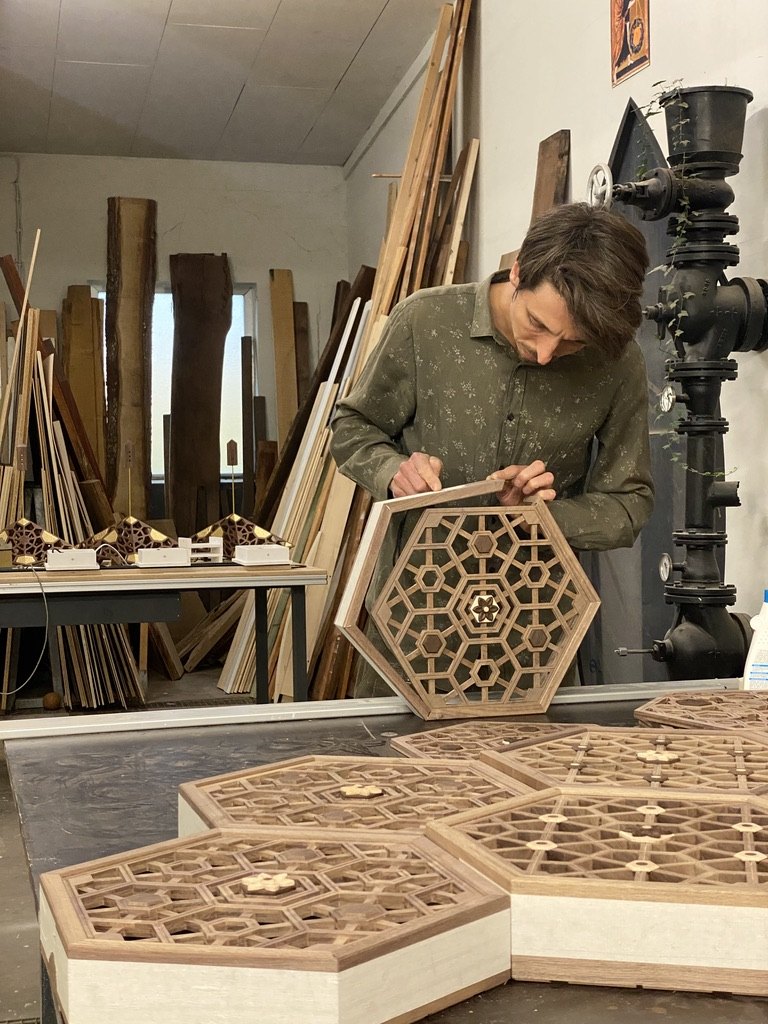 At the bench
Your turn
Draw your own geometry.
- Draw a circle.
- Keep the compass at the same width. Put the point anywhere on the circle and draw again.
- Move the point to where the new circle crosses the first one and draw again. Go round until you have six.
You've just drawn what stopped me in my tracks in Rome.
If you'd like to go further, I run hands-on geometry workshops for teams.
Put the point down.
My toolkit
The Geometer’s Alphabet.
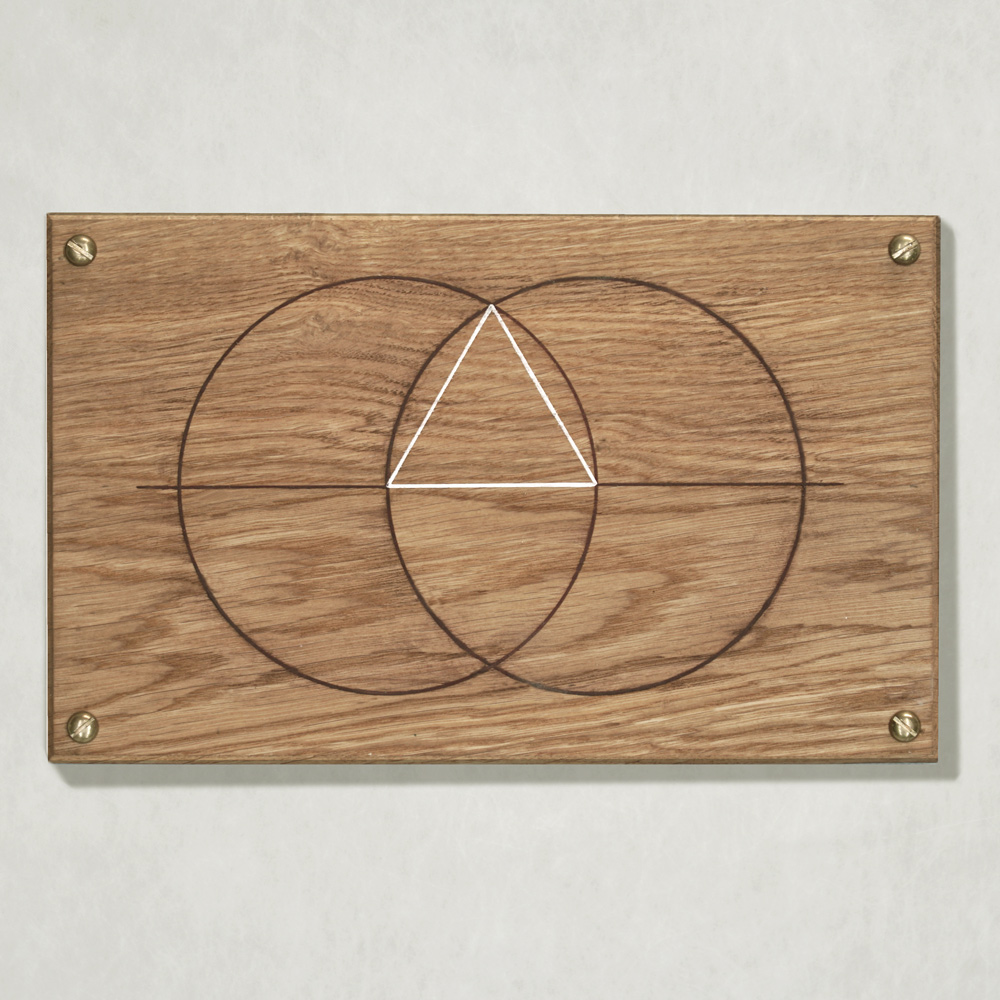
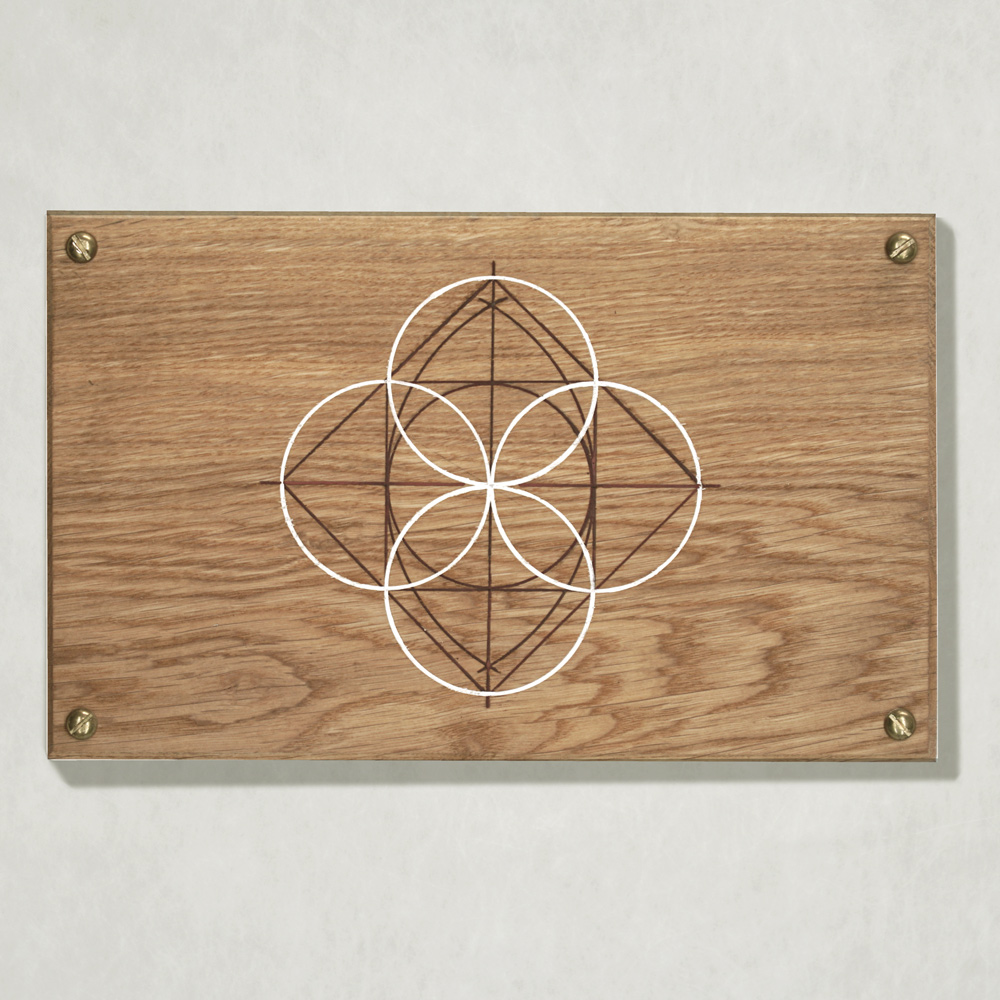
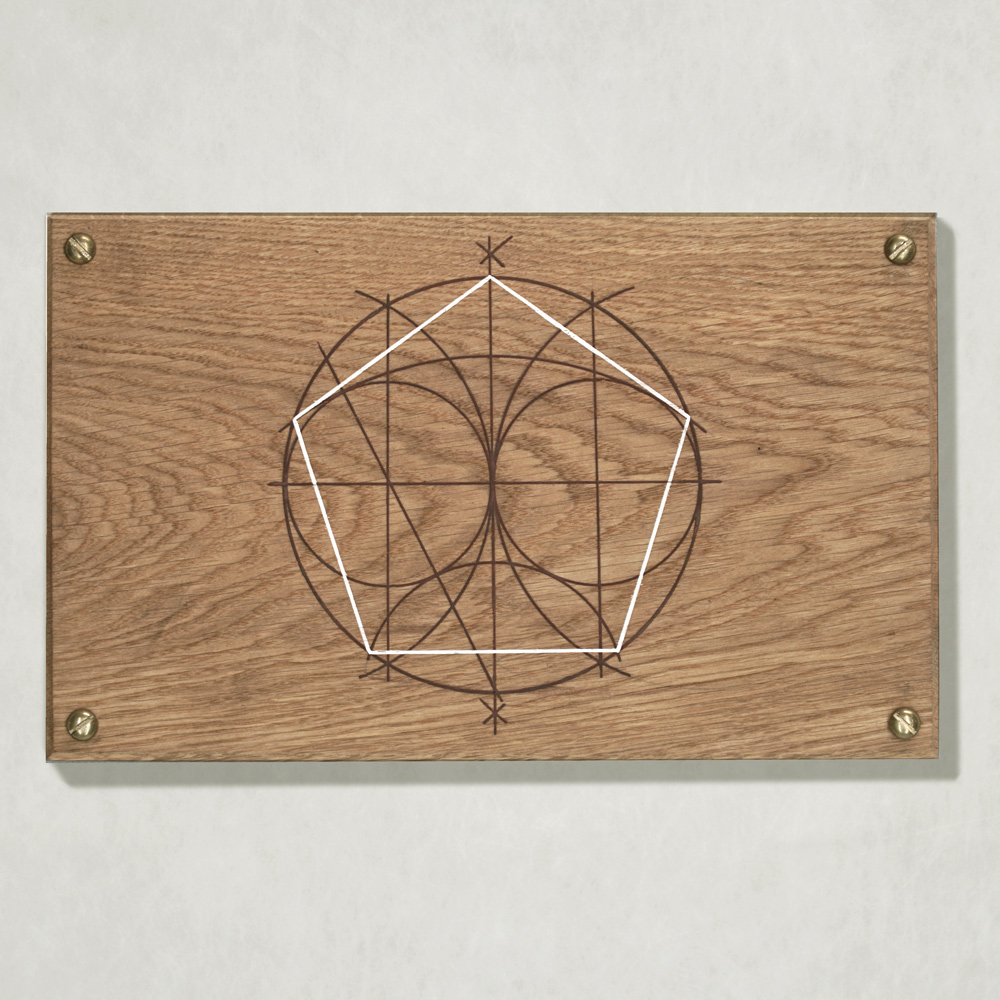
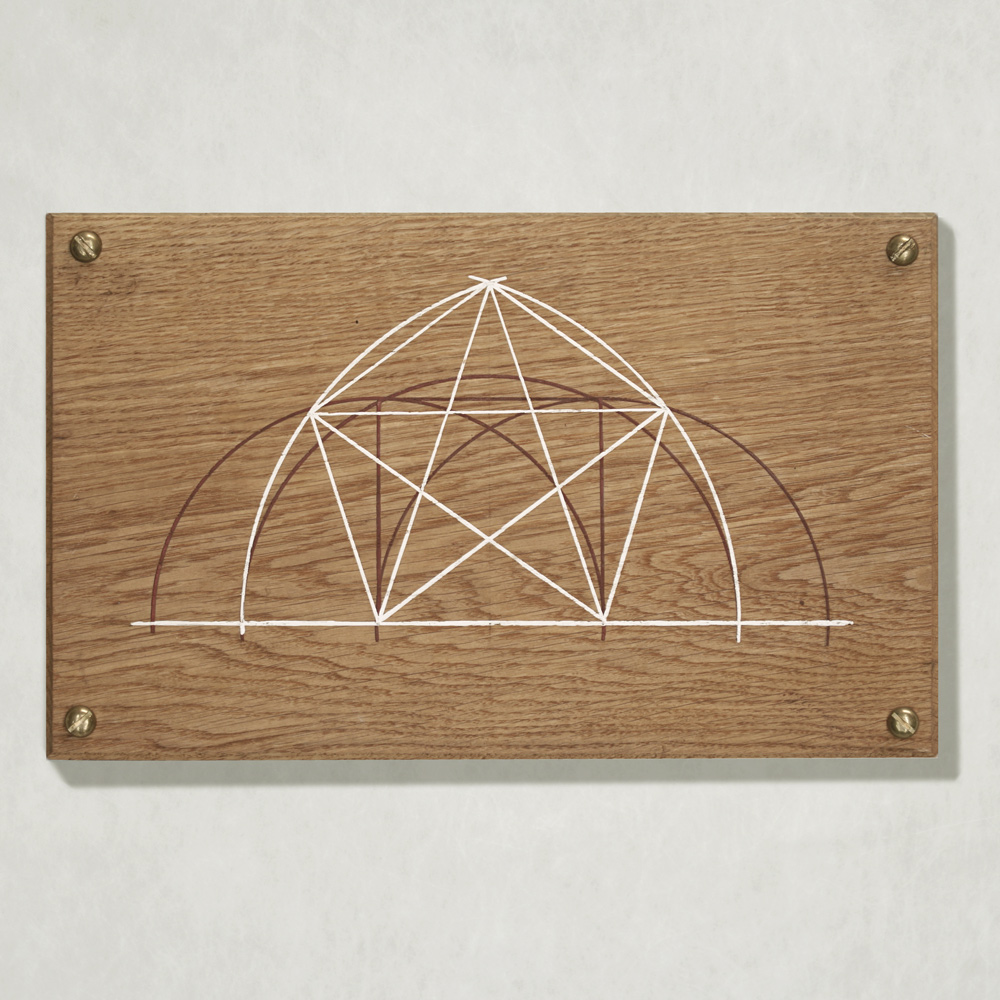
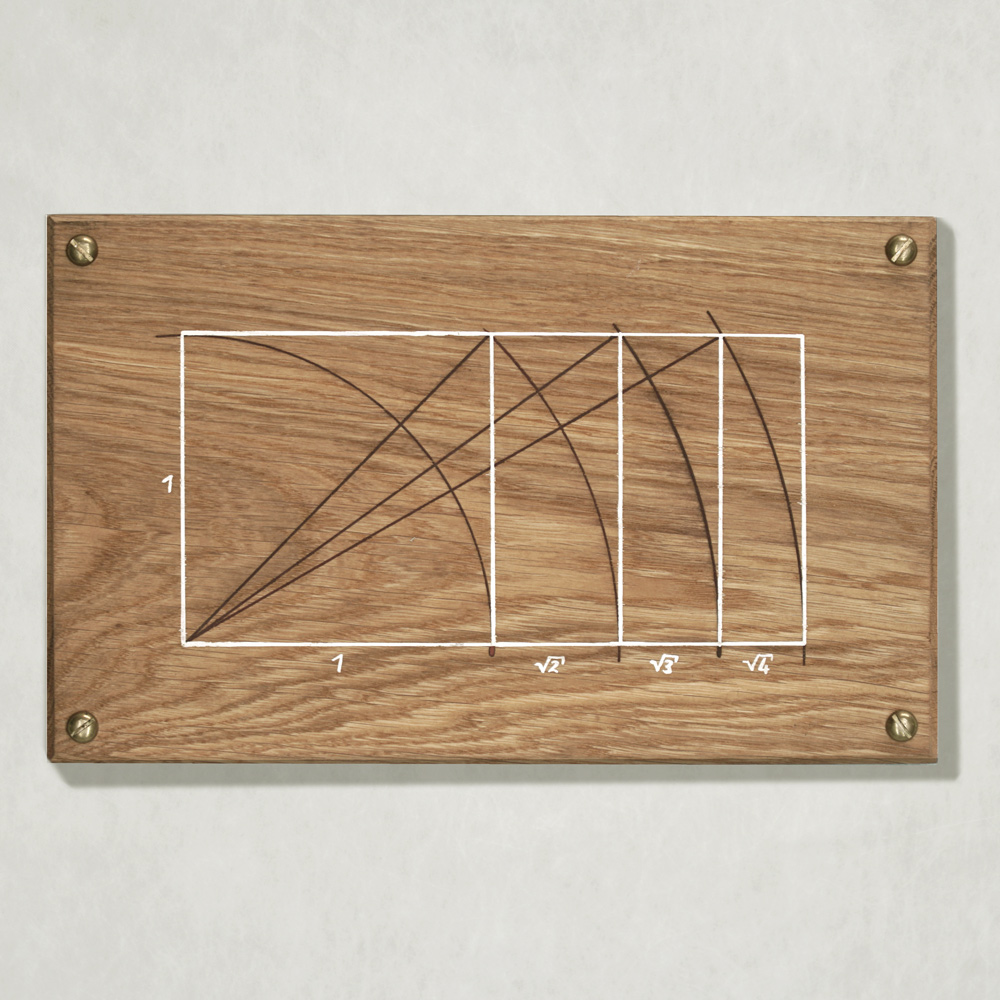
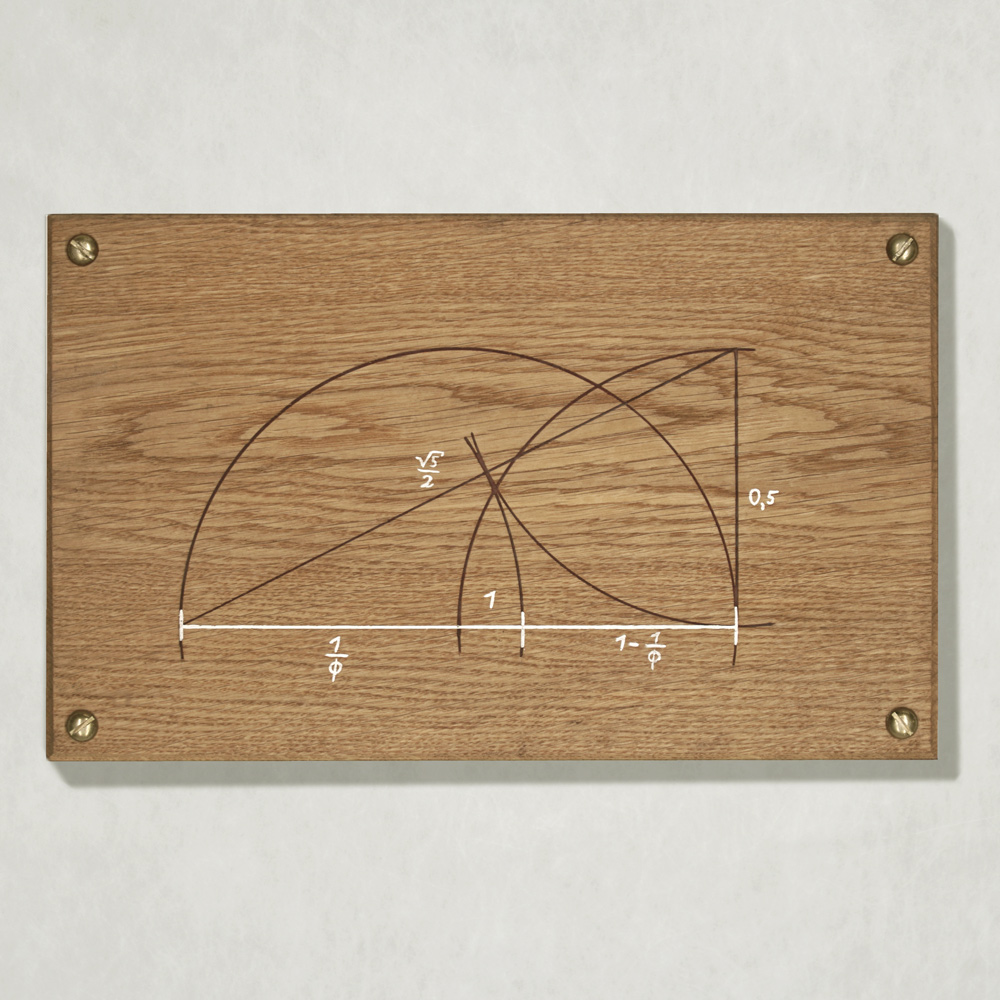
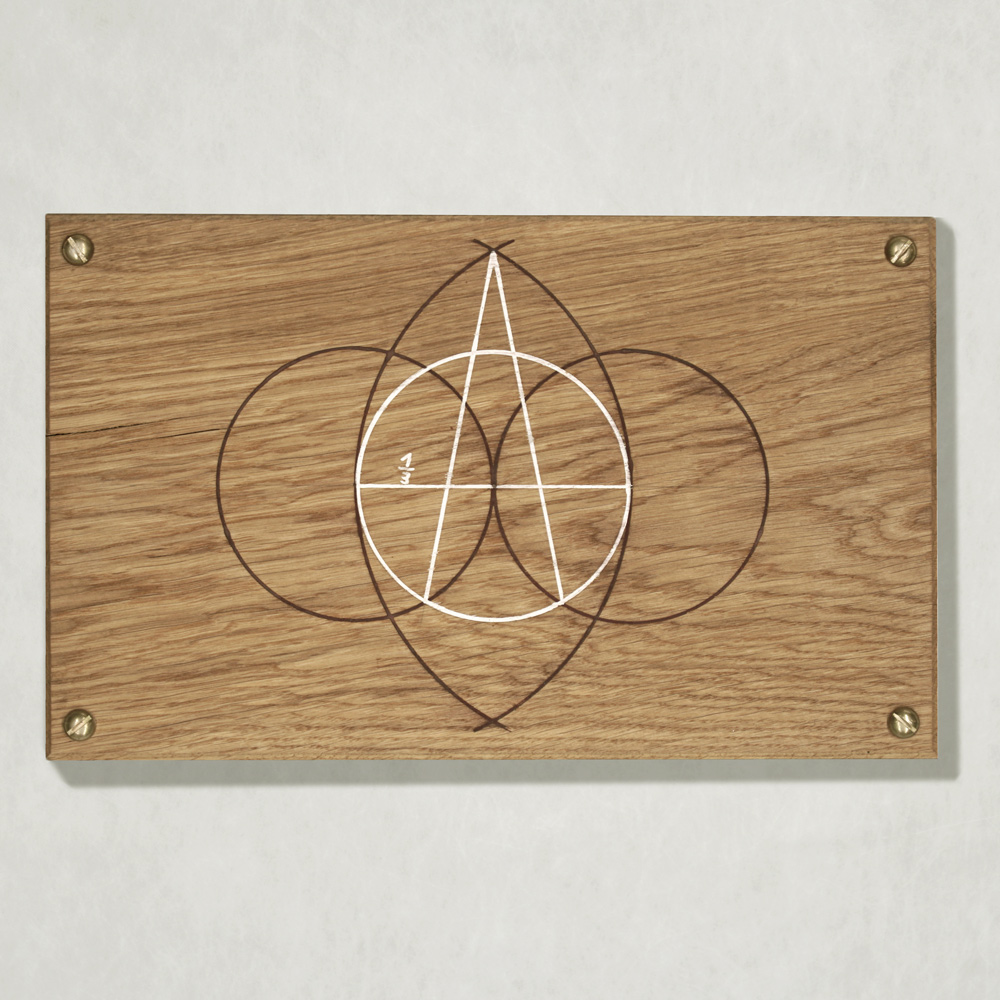
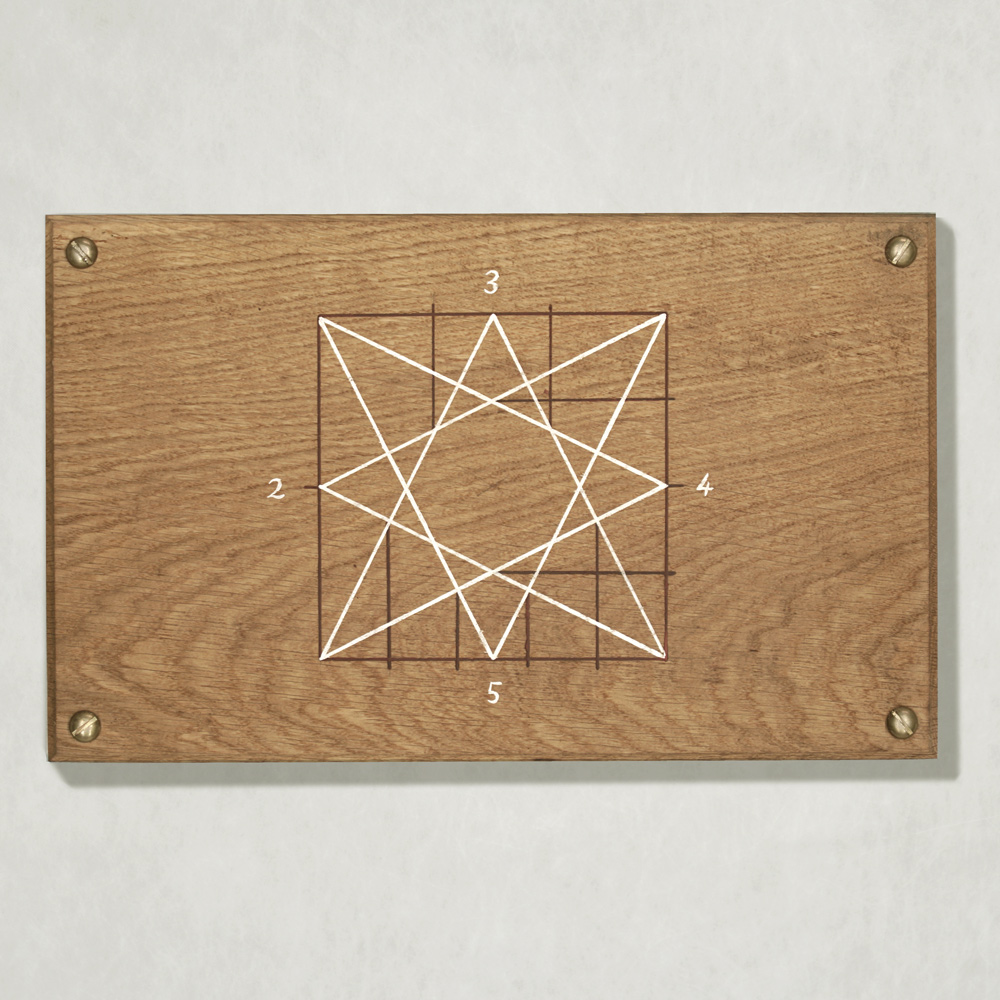
Every craft tradition had its pattern books. This is mine: twelve panels in egg tempera on oak, each showing one essential construction, from dividing a line to building the proportional rectangles. Most of my pieces start from one of these twelve drawings.
 01
 02
 03
 04
 05
 06
 07
 08
 09
 10
 11
 12
Geometry is number you can see.